
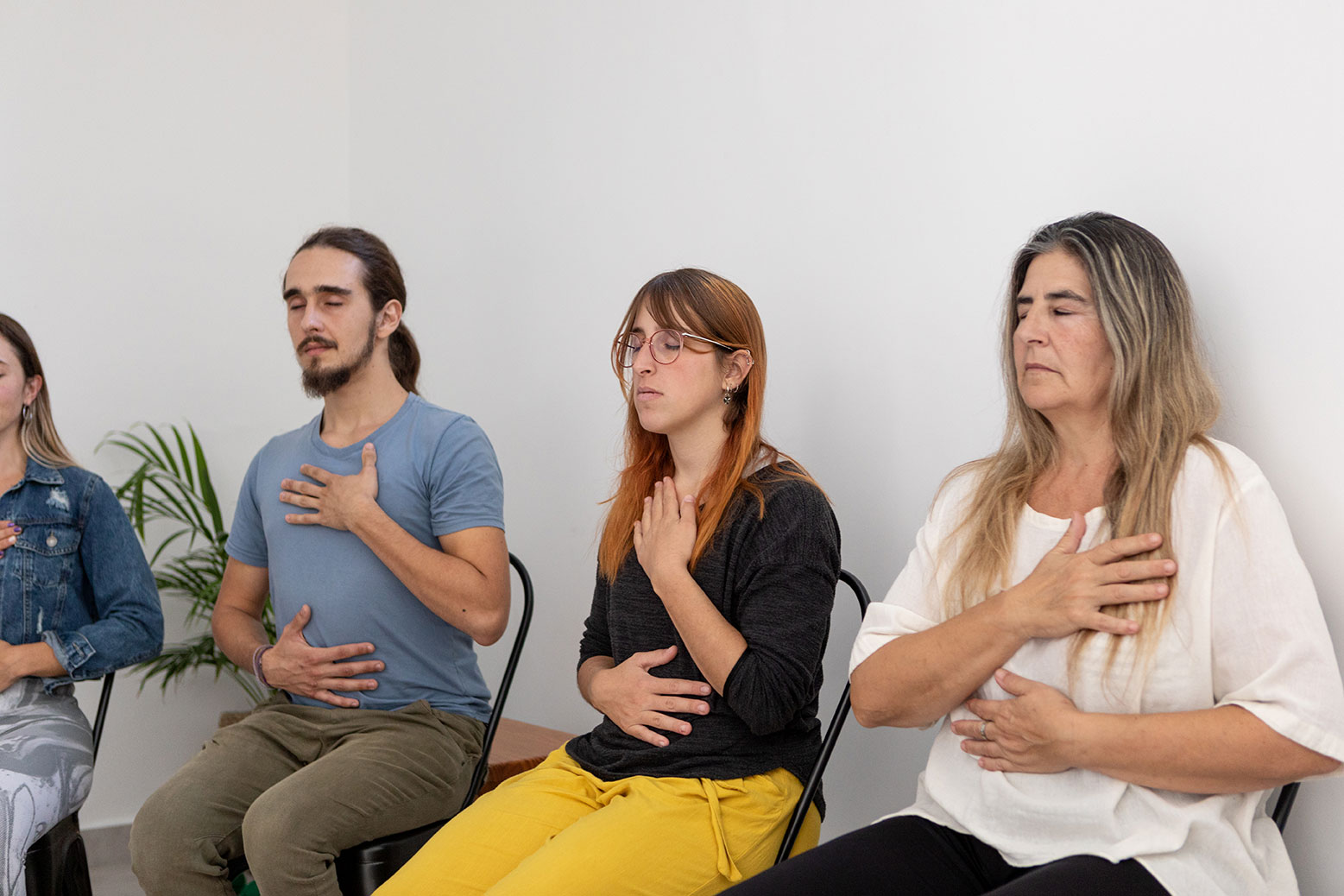
How to apply mindfulness to the reality of your life.
Life can be challenging. It can also be wonderfully fulfilling – but the tough truth is that we can face all sorts of physical and emotional challenges at different times.
Mindfulness can help you navigate the choppy waters of life. It’s about getting more ground beneath your feet so you can make wise decisions for today and tomorrow.
Fatima, This Way Up participant
The starting point is a basic distinction between two modes of mind: autopilot (or doing mode) and intentional (or being mode).
Autopilot mode
Autopilot takes care of basic tasks and activities, and also alerts us to danger. It’s essential to our survival. It’s also highly useful in carrying out all our routine activities without us having to think about them, like getting dressed, walking, talking.
However autopilot mode isn’t so useful when it comes to solving complex tasks, including and especially those that involve complex and difficult emotions. Yet we use autopilot so often that sometimes we get stuck here, particularly when something happens that we perceive as a threat.

Intentional mode
This is when it’s great to activate the other mode of our mind – intentional – located in our ‘clever’ neo-cortex.
This part is better suited to the job of solving complex problems and emotions. It’s capable of highly sophisticated, analytical and imaginative thinking and problem solving.

The ABC of mindfulness
This is where mindfulness comes in. The best way to step out of automatic repetitive thinking and to step into intentional thinking is to create a gap or space for awareness and reflection. And this is what mindfulness is all about.
We use a simple ABC model of mindfulness:
Awareness
Awareness
Paying gentle attention in the present moment to your experience in your mind, body, and environment, without judgement. This helps create a gap or space for reflection.
Being with
Being with
Having created space, this allows our brain and body to process our experience. The mindfulness approach here is to notice thoughts, emotions and body sensations, and to allow them to run through us without getting over involved in them.
Choosing wisely
Choosing wisely
By doing the A and B we open up access to the wiser parts of our brain where we can see things more clearly, and what’s in our best interests. This can include how to understand and process our current challenging reality and all its implications, and to make good decisions about what to do with our time and energy.
Top tips for applying the wisdom of mindfulness for cultivating wellbeing
- Establish a mindfulness routine and practice – ideally first thing in the day, even if only a few minutes.
- Be vigilant around how much news and social media you engage with. It can be quite anxiety-provoking. One dose of news a day is enough.
- Notice strongly triggering thoughts and write them down. It’s also really useful if you can find people to share those thoughts with. Chances are you’re not the only one to have had them.
- Find positive distractions: keeping busy with activities that are interesting, nourishing and stimulating is a brilliant way to keep anxiety at bay.
- Be kind to yourself. This is perhaps the most important of all. Mindfulness can open up the portals to natural kindness to self and others. Carve out time for gentle, self-caring activities as far as possible.
- Don’t give yourself a hard time for the fact that you may experience difficult emotions at times. This is an entirely natural part of being human.
Five top tips for general wellbeing
The following five top tips are taken from the New Economics Foundation’s ‘five ways to wellbeing’. They are highly effective in establishing a more resilient and positive outlook on life.
ONE: Connect
ONE: Connect
Feeling connected to others can make all the difference in your mood and outlook.
TWO: Be active
TWO: Be active
Exercise and physical movement are not only good for your body, but for your mind too.
THREE: Take notice
THREE: Take notice
This is the mindfulness thing again! It’s another way of applying it throughout your day. Take time to look at things in your environment afresh. Just notice how things actually are.
FOUR: Keep learning
FOUR: Keep learning
If you have any spare time, learning or developing new skills can provide a powerful boost to wellbeing. There are a great many free online courses. Or perhaps you might want to pick up some activity that you used to enjoy doing but have neglected for a while (e.g. playing a musical instrument, knitting, etc.).
FIVE: Give
FIVE: Give
Again, if you have spare time, you may feel able to offer your support to others who may need it. Being of service to someone else sometimes really helps take the focus away from your own concerns, at least for a while.
More from This Way Up

Refer a Client to This Way Up
Are you are a professional supporting clients who are struggling to move on in their lives?