

Funeral elements and choices
The amount of money spent on someone’s funeral does not equal how much you loved them.
Some people find carrying out or arranging some aspects themselves can make the funeral feel much more personal and like ‘a gift’ to the person who has died. It can also help reduce the cost.
Transport
Transport of the person who has died
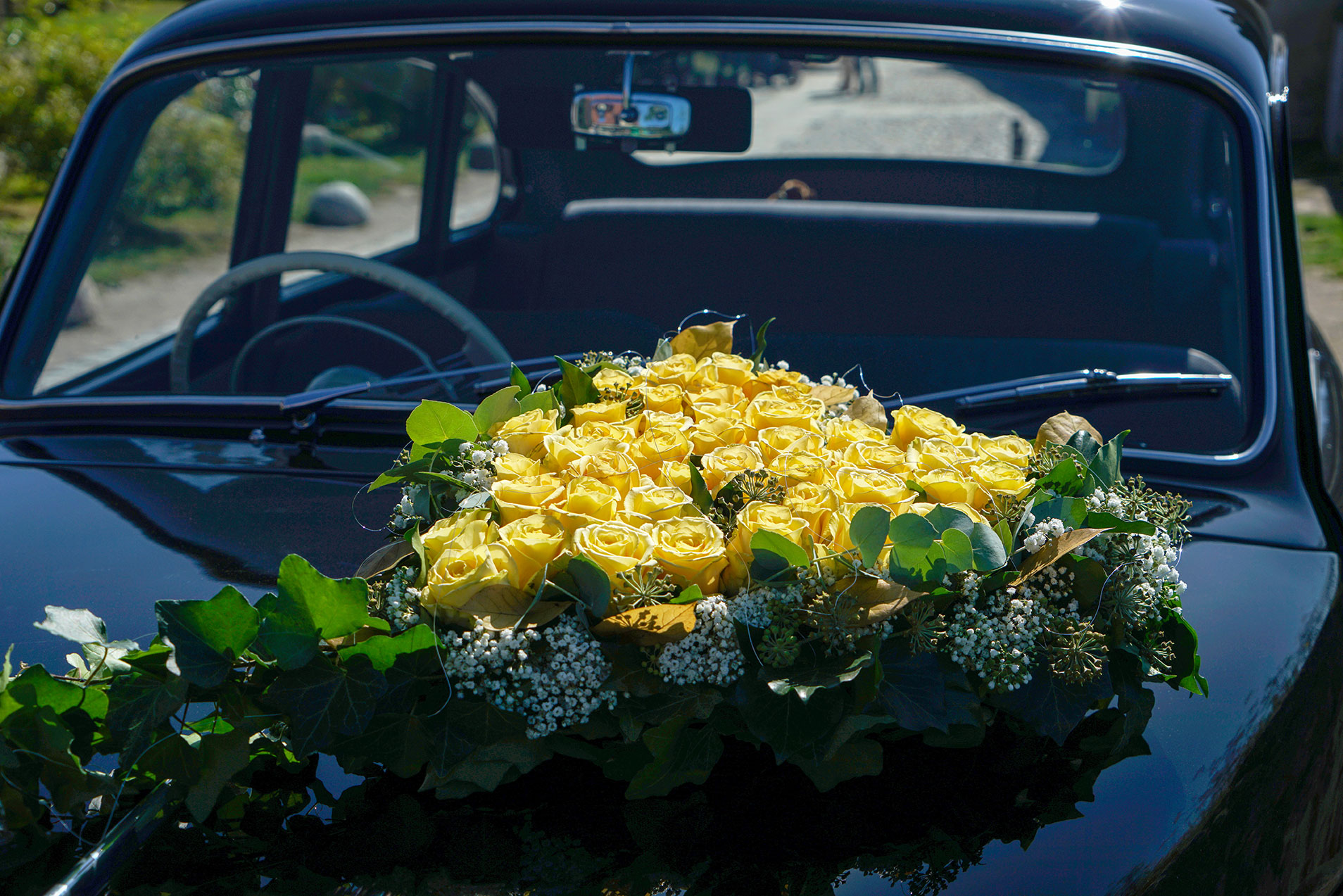
If you’re using a funeral director, ask about any less expensive options they have for transporting the body to the funeral, rather than a more expensive hearse. For example, an estate car or private ambulance can be used. If you have a suitable vehicle yourself, funeral directors will often support you to use this.
Transport to attend the funeral
If you’re using a funeral director, you may be offered the use of a chauffeured vehicle or limousine for mourners to travel to the funeral. This service is optional, and the cost can add up quickly. Some people choose to use their own vehicles, or a taxi service to travel to the venue instead. You can often form a cortege with the lead vehicle carrying the person who has died if you wanted.
Coffin and pallbearers
Choice of coffin
If you are using a funeral director, ask for details of their simplest coffin.
You may also be able to provide your own coffin, purchased directly from a supplier. If you choose to do this it’s important to check it meets the requirements for the type and location of the funeral you are arranging. Some funeral directors will charge a “handling fee” for coffins which aren’t purchased through them.
Pallbearers
Would you or family/friends like to carry the coffin yourselves? Some people feel it is one last ‘gift’ they can give to their loved one.
If you would like to provide some, or all the bearers, speak to the funeral director (if you are using one) to check this is possible. It may also reduce the cost.
If you would like to be involved with moving the coffin at the funeral, but aren’t confident carrying it on your shoulders, you may be able to use a wheeled bier instead.

The funeral service and venue
Faith leaders and celebrants tend to charge to lead a funeral services, but if you are a regular attender of a faith community, your faith leader may offer to lead the service for free. If you are using a funeral director, their staff may also be able to lead a simple service, or a trusted friend or family member may want to take the lead.
A funeral service can take place in different locations. Many faith-based venues will charge for you to use their space for a funeral, although if you are a regular attendee they may waive this. If you are using a funeral director, they will often charge for the additional time and travel if you choose to have a service somewhere before attending the crematorium or cemetery. Having the service and committal at the crematorium or cemetery chapel may help to reduce the cost.
See our guidance on choosing the type of funeral for more ways to reduce costs for a cremation or burial.
Embalming
Embalming is sometimes referred to as ‘presentation’, ‘hygienic preparation’ or ‘preservation’.
Many funeral directors offer embalming, some include it in their prices and may not reduce their fee if you opt not to have it, while with some it is a separate, extra charge. If you want to view the deceased person, some funeral directors will assume that you want embalming. Best practice is to ask for your consent, but they may not.
Embalming aims to preserve the body temporarily by draining and replacing bodily fluids with chemicals. It is classed as an invasive procedure.
Funeral directors may recommend it, especially if several weeks have passed since the person died and you want to view them. It may be more advisable in some situations than others, but there is no rule to say that you must have it done. It can affect the person’s colouring and how their skin feels so if you are considering it, ask the funeral director what to expect. Some people prefer not to have it as they feel it can make the person look less natural.
There can be other things funeral directors can do to make the viewing experience softer, so ask them what options are available.
Some green cemeteries will not allow embalming, and it is not allowed for burial at sea. If you are having the deceased person repatriated to another country, they will normally need to be embalmed.
Viewing the person who has died
This is a very personal choice, and there can be different factors to bear in mind. If you are using a funeral director, have chosen not to see the person who has died at their premises, and do not want this option available for other friends or family members, it’s helpful to let the funeral director know. Sometimes this can make a difference to the cost of the funeral.
In some cases, a funeral director or other professional involved in the care of the body of the deceased person may recommend you do not view the body if it has already started to break down. Some people find it helpful to write a letter to the person who has died to say goodbye, rather than seeing them.
Orders of service and floral tributes
Orders of service
Sometimes, people choose to have a printed booklet at a funeral service setting out the order of ceremony. These can vary in cost, professional ones often consisting of a flat fee for design and then printing costs dependent on the number of copies required.
Orders of service – do you need them? If so, could you print your own? It could be a sheet of paper rather than a booklet.
Flowers
Did the person who died want flowers? If so, consider purchasing some lovely, but inexpensive supermarket flowers and arrange them with some ribbon. Or going to a florist direct will often be cheaper than going through a funeral director.

Other ways to keep funeral costs down, whilst keeping the arrangements meaningful.
Choosing the type of funeral
Deciding between a burial, cremation or repatriation isn't always an obvious choice. There are ways to keep costs down specific to each option.
Using a funeral director
There is no requirement to use a funeral director. If you choose to use one remember that, like anything else you pay for, you should be happy with the price you are paying and the service you receive.

Doing it yourself
You do not have to employ a funeral director and may decide to take care of the arrangements yourself.

Council and hospital funerals
If you have no source of funds, or if you do not want to take responsibility for the funeral for other reasons, the council where the person died can provide a simple, respectful funeral.
More from Down to Earth

Raising money towards funeral costs
There are a range of options for financial support towards funeral costs

About Down to Earth
Since 2010 we’ve helped over 9,500 people in all corners of the UK to plan meaningful and more affordable funerals.

How much does a funeral cost?
Funeral costs vary across the UK, and differ further depending on the arrangements made.